
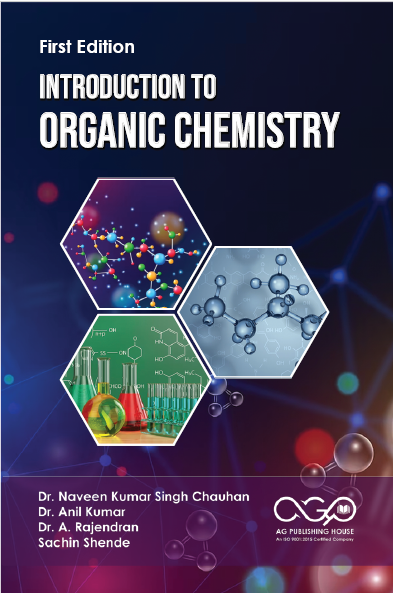
Introduction to Organic chemistry
by Dr. Anil Kumar, Dr. Naveen Kumar Singh Chauhan, Dr. A. Rajendran, Sachin Shende
No reviews yet
₹655.00
Order now for delivery in 6 to 7 days
1

Premium Quality

Fast Shipping

Best Price
Description
The study of creating organic molecules from raw materials is known as "organic chemistry," and it takes place in a laboratory setting. Chemicals for agriculture, pharmaceuticals, food additives, paint, plastics, cosmetics, enzymes, and a wide range of synthetic materials are all synthesised using organic chemistry. Organic chemists not only synthesise a wide variety of vital molecules, but they also improve upon existing methods of compound production, increasing the process's total value.Understanding organic chemistry is foundational to earth science education the five main branches of earth science are environmental science, hydrology, geology, and meteorology. Earth scientists often depend heavily on concepts of organic chemistry. Geologists can learn about the Earth's diverse components and their evolution because of organic chemistry. Additionally, it lays the groundwork for both mathematical and qualitative comprehension of Earth's functioning and evolution.
Learning about and working with organic molecules is only one aspect of organic chemistry. The production of everyday items derived from organic chemicals is also a part of it. Organic molecules are present in a wide variety of common home products. For instance, soaps are salts of sodium or potassium fatty acids. In addition, polyglucose & coconut oil alcohol are examples of surfactants, which are usually amphiphilic organic molecules. Products for the home may also include benzene, acetone, toluene, formaldehyde, xylene, and methylene chloride, among other organic chemicals.
Product Details
No. Of Pages:234
ISBN:978-81-19843-19-0
Subjects: Chemistry
Shipping Details
Weight: 0.35 kg
Length: 23.00 cm
Width: 15.00 cm
Height: 2.50 cm

Customer Reviews
(0)No reviews yet for this product.