
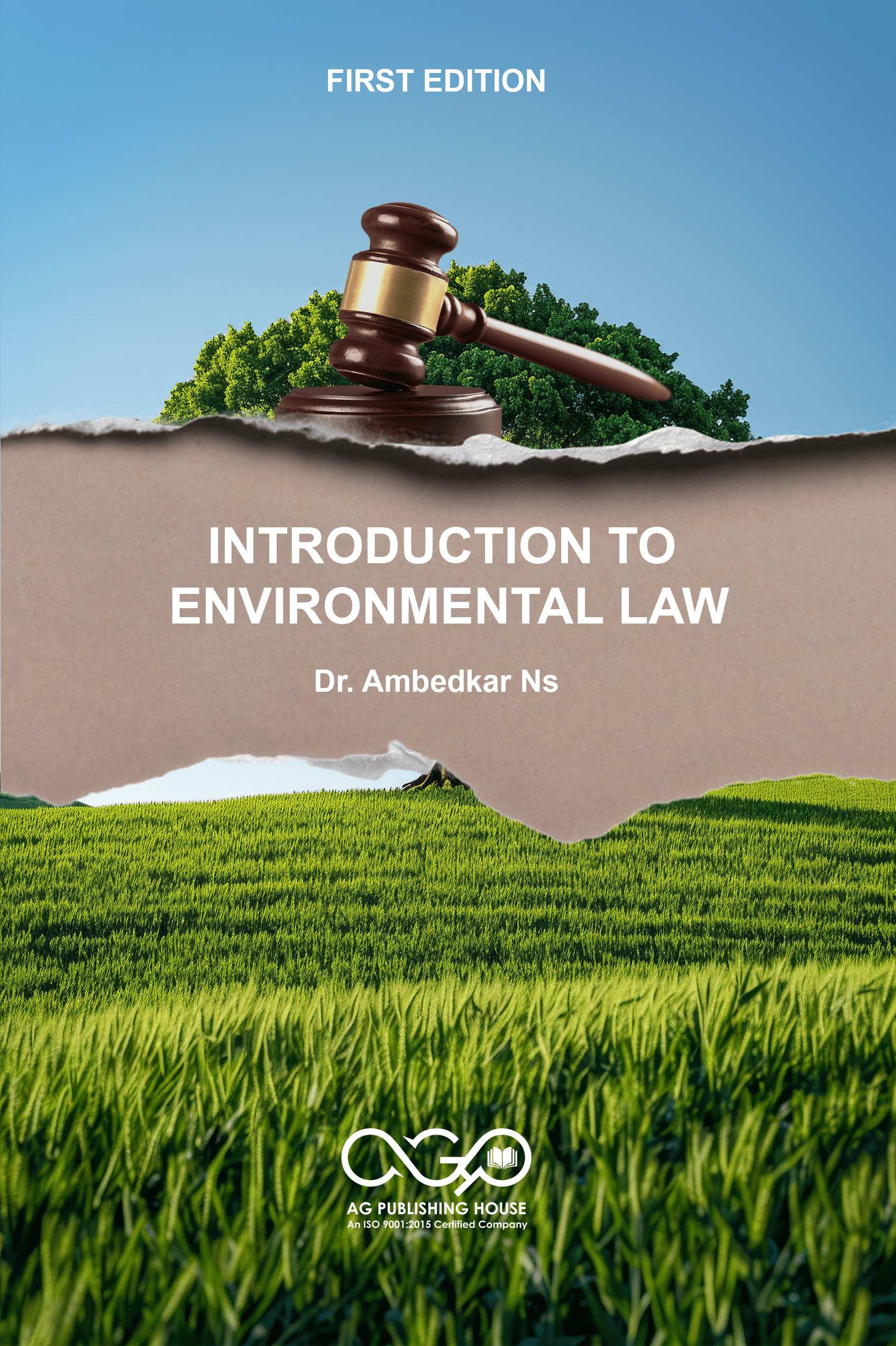
Introduction to Environmental Law
No reviews yet
₹590.00+ Delivery Charge
Order now for delivery in 6 to 7 days
1

Premium Quality

Fast Shipping

Best Price
Description
This textbook offers a thorough commentary on issues of environmental law, organized into eight chapters. This guide will be highly beneficial to academics, researchers, business investors, and the various international organizations in the field, and they will recognize its importance in the field of comparative environmental law and policy.
The first section of the book's main body covers legislation that is specifically designed to prevent pollution of the air, water, land, and waste in certain areas of the environment. The preservation of cultural and natural resources, including parks, reserves, agriculture, forests, minerals, and monuments, is then covered in a chapter on nature and management of conservation. Environmental zoning laws and land-use planning, liability regulations, and administrative and legal remedies are some of the topics covered further. The research also includes a look at how regional and international treaties and laws affect environmental protection. A particular focus is on National Green Tribunal and International Conventions, including an analysis of its formation and potential future initiatives. Additionally, the book examines biodiversity legislation in India. Amendments of Forest Act of 1927, the Public Liability Insurance Act of 1994, the Environment Protection Act of 1986, and "Air (Prevention and Control of Pollution) Act" of 1981 in the context of environmental law are also included. This revised and updated version incorporates all of the aforementioned revisions as well as those made in 2024 by Water (Prevention and Control of Pollution) Amendment Act.
The textbook covers the most recent advancements in environmental law as well as a deeper examination of the environment's constitutional standing. Protecting our air, water, forests, animals, and biodiversity are just a few of the many issues it addresses, along with sustainable development and the legal control of dangerous chemicals. Along with that, it takes a look at the environmental laws that India has passed to curb pollution and strengthen environmental safeguards. The flaws and gaps in environmental laws are outlined in detail.
Graduate and postgraduate environmental law students, scholars, advocates, judges, non-governmental organizations (NGOs) involved in environmental protection, representatives from the Ministry of Environment, Forests, and Climate Change, and anybody else interested in learning more about the topic would find the book to be beneficial.
Product Details
No. Of Pages:219
ISBN:978-81-976705-3-4
Subjects: Law
Shipping Details
Weight: 0.35 kg
Length: 23.00 cm
Width: 15.00 cm
Height: 2.50 cm
About the Author

Customer Reviews
(0)No reviews yet for this product.