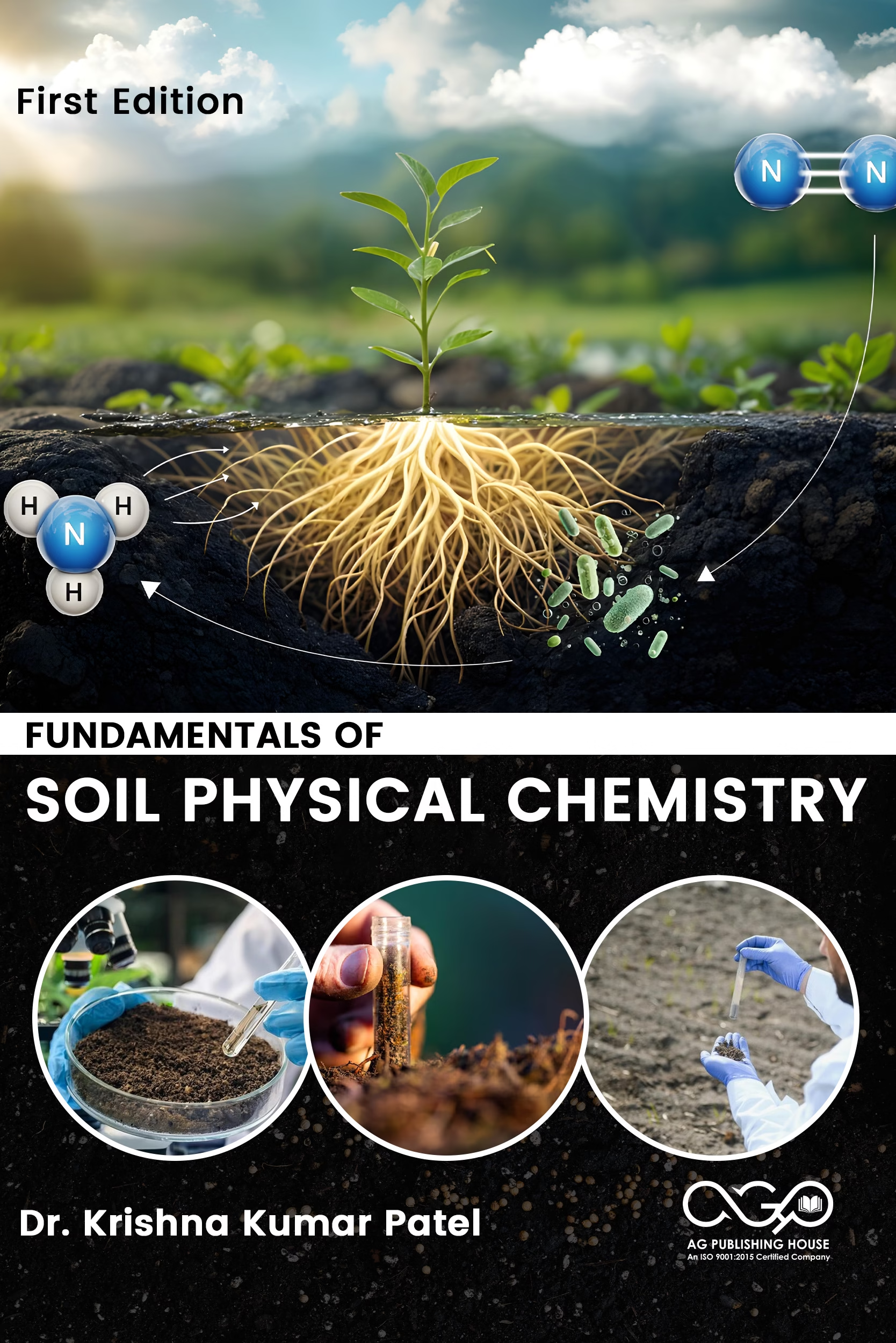
Fundamentals of Soil Physical Chemistry provides a comprehensive exploration of the chemical and physical interactions that govern soil behavior at the microscopic and macroscopic levels. By merging the disciplines of soil science and physical chemistry, this book addresses fundamental processes that influence soil fertility, water retention, pollutant transport, and environmental sustainability. The book is structured to gradually build understanding, beginning with basic principles of physical chemistry such as thermodynamics, reaction kinetics, and phase equilibria and applying them to real soil systems. Special attention is given to colloidal properties, ion exchange mechanisms, adsorption-desorption phenomena, and the behavior of soil water and gases. The text also includes chapters on the role of soil minerals, surface charge dynamics, pH buffering, and redox reactions in controlling nutrient and contaminant mobility. Each chapter incorporates clear objectives, key terms, illustrative figures, and problem-solving exercises to enhance learning and retention. Case studies and examples from environmental and agricultural contexts are used to highlight practical applications and current research trends. The content aligns with curricula in soil science, environmental chemistry, and agricultural engineering. Ideal for students, educators, and practitioners, this book equips readers with the theoretical background and analytical tools necessary to understand and solve soil-related problems from a physical chemistry perspective. Whether used as a classroom textbook or a reference guide, Fundamentals of Soil Physical Chemistry is an essential resource for anyone seeking to understand the chemical and physical complexities of the soil environment.